Danny Byrne, ISA International Political Committee
(This article was first published on 17 December 2025)
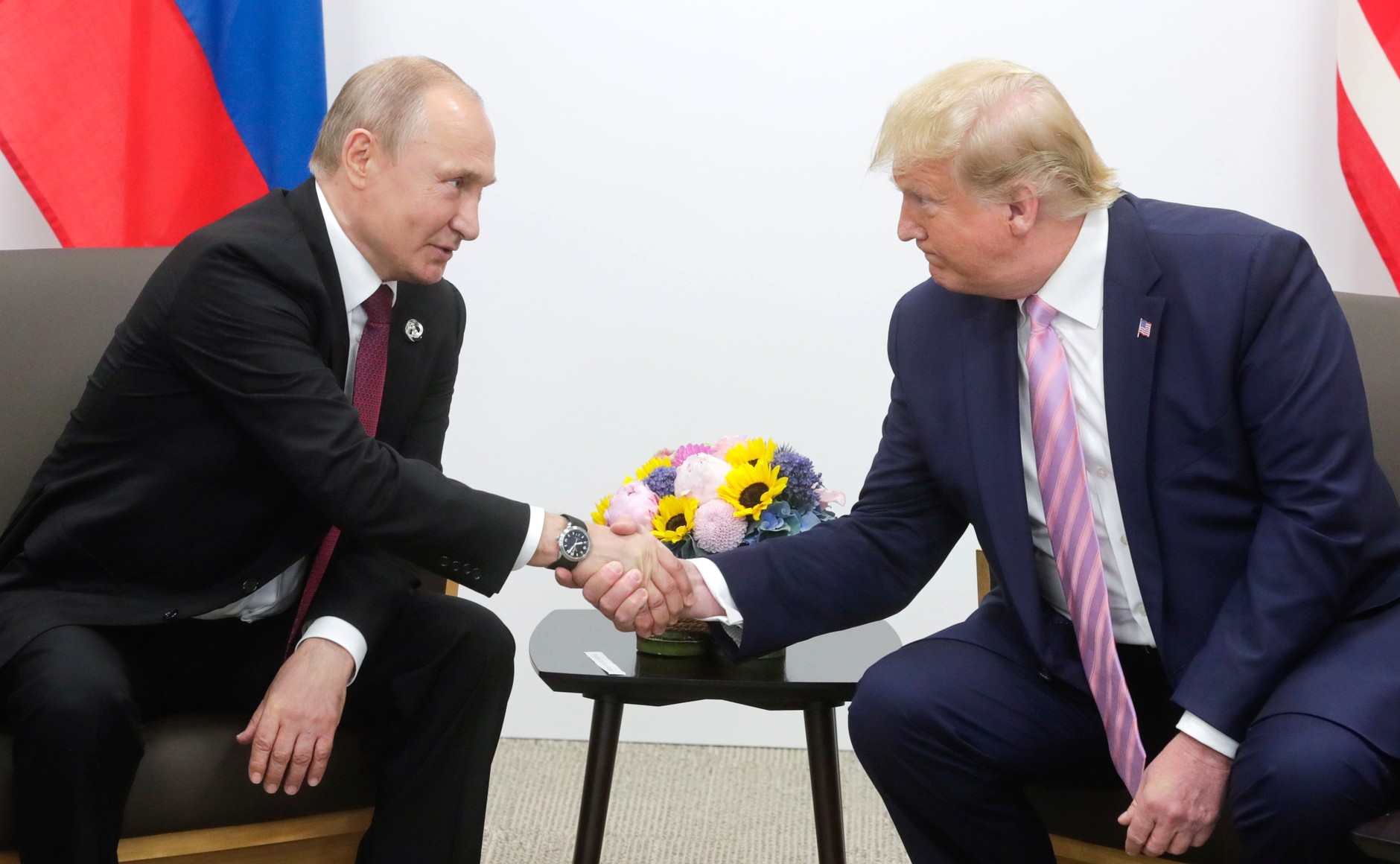
Almost four years after the Ukraine war began, Western imperialism is in disarray. European governments, not least in Kyiv, are in panic, scrambling from one emergency summit to the next, desperate to assert their interests as the war’s future is hammered out. The cause of their panic lies in the realization that there seem to be only two voices which really matter: those of Donald Trump and Vladimir Putin.
As internationalsocialist.net has previously explained, Trump’s second term is dramatically shaking up world relations. The world’s strongest super-power is now being run on his terms, with a new, brutal, transactional approach to asserting US imperialism’s power and interests. The impact of this change on world relations has just gone up a gear.
US imperialism disengaging
Trump’s approach to Ukraine, as with all other questions, has been volatile and full of zigzags. However, when viewed as a whole, the zigzags all lead in the same broad direction: Trump is pulling US imperialism out of a war in which he has little interest. The Polish Prime Minister, Donald Tusk, reportedly said of the “peace plan” cooked up by Russia and the US, “we know this is not about peace. It’s about business.” And he is not wrong.
Trump’s Bonapartist regime is not motivated by “big picture” strategic thinking about the US, its allies and adversaries. He is driven by short-term gain and cold, hard cash. For Trump, the details of his peace plan surrounding Ukrainian territory or “security guarantees” are not of great importance. The parts which interest him the most concern the trillions of dollars which can supposedly be gained via new partnerships with Russian imperialism to plunder the Arctic, loot Ukrainian resources, etc. In pursuit of this loot, Trump has no qualms in throwing US imperialism’s long-term allies, and Ukraine itself, to the wolves.
Upon taking office, he made it clear that for him, this was Europe’s war and that the Europeans would have to shoulder the burden. To a great extent, he has already succeeded in this. Today, the US is no longer directly supplying Ukraine with arms and equipment. Instead it sells supplies to other, mostly European, NATO members who in turn pass it on. The only direct aid being provided by the US – and which has been switched on and off several times – is the provision of intelligence (which remains absolutely crucial for Kyiv). And this too could go soon.
Strategy shaken up
Trump’s disinterest in the Ukraine war is part of a broader, and quite fundamental, strategic rethink in Washington’s corridors of power. The Biden administration’s support for Ukraine was based not on any fondness for its people or government, but on imperialist self-interest. This was a proxy war between a US-led bloc and a revanchist Russia, behind whom stands the Americans’ main rival, Chinese imperialism. In arming and driving Ukraine’s war effort, the West hoped to undermine a long-term aggressive adversary (Russia) and send a powerful message to Beijing.
Trump is, of course, fully committed to US imperialism’s quest to combat Chinese power. He has actually taken the conflict to a new level, and succeeded in pushing Beijing back on several fronts. However, his strategy to achieve this differs greatly from that of Biden and the traditional NATO establishment.
Today, Trump sees the waging of an economic war against China as a far more efficient (and lucrative) way of reasserting US hegemony than the waging of an endless and unwinnable proxy-war in Europe. As an added bonus, he hopes that a rapprochement with Russia can weaken Chinese imperialism’s bloc, drawing Beijing’s most important ally out of its orbit.
Military disengagement from the conflict in Ukraine will also allow the US to preserve and replenish military supplies, which have been significantly undermined by both this war and its propping up of Israel’s genocidal onslaught in the Middle East. This is by no means a policy of peace – Trump wants to focus the US military on projecting power in the Pacific and in its own hemisphere, where he is already perpetrating acts of war against Venezuela.
Turning on Europe
Where Trump’s policy represents perhaps the most fundamental shift for US imperialism is his approach to managing – or in his case taking a sledgehammer to – Washington’s traditional alliances. The Trump school of imperialism views loyalty (our rather obedience) as a one-way street. It seeks to bully and extort “friend” and foe alike. This is devastating for European capitalism in particular.
Indeed, Trump’s “National Security Strategy” document which was published last week treats the continent with open disdain. The only foreign government to have welcomed the text is Russia’s and it is not hard to guess why! Whereas similar documents throughout the past period designated Moscow as public enemy #1, this one pledges only to deepen cooperation with Russia, and help “manage” its relationship with Europe.
It is for the European powers themselves for whom the document reserves its harshest language. It pledges the US to act, not in defence of European governments, but rather to “cultivate resistance to Europe’s current trajectory within European nations”! What this means in reality is spelled out further, when the document hails the rise of “patriotic European parties” as a solution to the continent’s problems. In other words, Trump’s main priority in Europe is to help the far-right to power.
An earlier and more extensive version of the document also reportedly outlined the administration’s aim to break up the European Union, proposing that Italy, Austria, Poland and Hungary leave the bloc in order to align more directly with Washington.
For Trump’s reactionary administration, the major crime of the European governments is made crystal clear – they are not racist enough. The document warned that Europe faces “civilisational erasure” due to migration, echoing prominent far-right tropes about a “great replacement” of the white race.
It is deeply ironic that this is how the major governments of Europe, who have spent one year bowing down to Trump, are rewarded for their servility. What’s more, Trump’s attacks come despite the fact that they are also dancing to his tune when it comes to migration, with the most brutal policies of state racism since the second world war being implemented across the continent.
Losing the war
Regarding Ukraine, the document attacks Europe’s “unrealistic expectations” for the outcome of the conflict. And in this assessment, there is more than a grain of truth. In fact, despite all the bluster and wringing of hands, everyone from Kyiv, to the EU and UK, knows that the war is being lost.
Any notion of enthusiasm, or optimism, or confidence in victory, has long since vanished. In Ukraine itself, support in opinion polls for fighting on “until victory” has plummeted from 70% in 2022 to 24% in August 2025. The tensions between Trump and European powers are not over how to win, but over how to manage their defeat.
Impatient to end the war and make big bucks, Trump is essentially pushing a deal which concedes more to Putin than Kyiv and Europe can stomach. Many speculated that the 28-point peace plan submitted by his administration to Zelensky was in fact written by Russian negotiators, in Russian.
Trump and Putin’s peace plan
Much of the plan is far less controversial than liberal commentators have suggested. That Ukraine will lose vast territories to Russia and never join NATO has been clear to all parties for quite some time. When on 14 December, Kyiv dramatically “conceded” on the latter demand, it was purely performative.
But there are major differences over how much territory Kyiv should be forced to give up and over the “security guarantees” to be put in place following a ceasefire. On territory, Zelensky and the Europeans propose a de facto division along the current line of contact but Putin, backed by Trump, demands that Ukraine also give up the whole of the Donbas (Donetsk and Lukhansk oblasts).
Putin and Trump cynically argue that if the war continues, Russia will take the rest of Donbas anyway, so signing it away now will only save lives. But this is a very difficult concession for Zelensky to make, from both a political and military point of view. Ukrainian troops hold only approximately 25% of Donetsk and almost none of Lukhansk, but these are the country’s most formidable defensive lines, fortified over the course of a decade or more. Russian troops have thrown everything at this region over the course of two wars, and only advanced at a snail’s pace.
If Zelensky gives these lines up without a fight now, Russian troops would find it a lot easier to advance deeper into Ukrainian territory upon any resumption of the fighting. While the US/Russian plan proposes that this area would remain “demilitarized”, Kyiv will understandably be sceptical, to put it mildly, about Putin’s sincerity. In the same vein, Trump also endorses Russian demands for the size of Ukraine’s army to be limited to a certain number, which would leave it more vulnerable to a future invasion.
Ukraine in crisis
This deal would be a very bitter pill for Zelensky to swallow, and very difficult to sell to Ukrainian society. While war weariness inside Ukraine is massive, with 77% supporting the idea of making concessions in exchange for peace, the same polls show 61% opposed to giving up the Donbas and 68% rejecting the idea of limiting the strength of the army.
Moreover, the deep crisis of his government further undermines Zelensky’s margin of manoeuvre to make concessions. Elected on a cynical “anti-corruption” ticket, his right-wing regime has been mired in one scandal after another. Recently, his own inner circle was affected with his most prominent ally and advisor, Andrei Yermak, forced to resign after his house was raided by anti-corruption police. It is no wonder that the government tried to neuter the state’s anti-corruption forces this year, only to be pushed back by mass protests in July!
Will Putin make a deal?
However, given the worsening situation for Ukraine on the battlefield and the pressure from Trump, it is possible that Zelensky will be forced into signing up to what many Ukrainians and Europeans would see as a capitulation. Truthfully, it is hard to see how anything better can be achieved for the Ukrainian side by continuing the war.
Another question altogether is whether Putin himself actually intends to stop fighting at all, given the relative strength of Russia’s position. A scenario in which Ukraine agrees to Washington’s demands but Putin drags his feet and, based on this or that pretext, refuses to sign up and opts to continue fighting, is also a strong possibility.
Many Western commentators lull themselves into a false sense of security, citing Russia’s extremely slow progress on the front, and mounting economic problems. But this is wishful thinking. In such a brutal and prolonged war of attrition, front lines do not simply shift in a linear or steady manner, as the accelerating pace of Russian advances already shows. With such a prolonged and generalized mismatch between the two sides, the prospect of a relative collapse of Ukrainian defences and more rapid and decisive breakthroughs for Moscow increases day by day. At the time of writing, Russian troops are fighting for full control of a series of new significant urban centres including Pokrovsk, Siversk, Huliaipole and Kupiansk. Beyond Donbas, they are also gaining ground in Zaporizhia oblast.
At the same time, an exaggerated picture of Russia’s strength should be avoided. Despite Ukraine’s disadvantages on the battlefield, they have managed to inflict increasing damage to Russia’s energy sector, with key oil refineries temporarily shut down on several occasions by drone attacks. The Russian war economy, which has resisted the worst effects of sanctions largely based on China’s help, is now almost certainly in recession.
Therefore, while Putin most certainly has the upper hand, it cannot be said that he has no incentive to bring the war to an end, especially with the terms of a deal stacked in his favour.
“Make money not war” – Trump’s plan for imperialist plunder
The commercial temptation of a Trumpesque “peace agreement” will also be strong in Moscow, especially the lifting of sanctions. However, by all accounts it is American billionaires who are licking their lips most of all at the prospect of profiting from Trump’s “peace”. It is no accident that Trump has business cronies Steve Witkoff and Jared Kushner doing the negotiating rather than diplomats.
Under the terms of Trump and Putin’s plan, US companies would reportedly be given exclusive rights to energy and mining resources across the Arctic. In Ukraine, US profiteers would be in charge of reconstruction efforts, with frozen Russian assets in European banks used to finance reconstruction operations and the profits divided between the US and Russia. These are the same frozen assets the EU leadership wanted to use to finance a loan to Ukraine, but got stuck when several European governments opposed the move, reportedly under pressure from the US. This further underlines the impotence and minor role of the EU in the “negotiations”.
This is what Trump’s imperialist aggression, disguised as “peace making” is all about. It was the same approach that underlined his grotesque plans for a “Gaza riviera” and the so-called peace deal between the DRC and Rwanda which just happened to also guarantee preferential US access to Congo’s mineral wealth. Another “peace” agreement he brokered with Armenia and Azerbaijan also just happened to include the creation of a “Trump Route For International Peace and Prosperity” under which US firms will lead new infrastructure and energy projects.
Trump is bringing imperialism’s real nature back into the spotlight, using US might to plunder nations and enrich the American billionaire class (and himself and his friends in the process). This is an aim he pursues via “peace” in Ukraine, but also via acts of war in the Caribbean today, and against Iran this summer. The same imperialist logic is what drives not just Russia’s aggression but also Chinese imperialism’s “Belt and Road Initiative”. The building of an international socialist movement against all imperialism has never been more urgent.
A serious blow to western imperialism
While perspectives for the future of the war remain uncertain, it is increasingly clear that when the war does end, the result will be a victory for Russian imperialism, at least relatively speaking. This will have a significant impact on the world situation.
Putin has not and will not achieve his original war aims, and he has paid a heavy price for his achievements already. But Russian imperialism has faced off against the collective West in a prolonged war, fought a major European army equipped with the very best of US and European kit, and (again, relatively) won.
In the process, the balance of global power has shifted to the deep detriment of Russia’s adversaries in Europe. Trump’s dramatic slaps to the face of European imperialism are also further eroding the idea of the US as a reliable defender of its allies, which will have far-reaching effects.
This does not mean, as many Western commentators suggest, that Putin’s example will inspire a Chinese invasion of Taiwan in the short term. As well as showing the limits of Western power, the war in Ukraine has also shown just how difficult an endeavor the invasion and occupation of a heavily-armed neighbour actually is. It has taken Putin two wars and hundreds of thousands of casualties to take one fifth of Ukraine, and the invasion of Taiwan would be immeasurably more challenging logistically.
No peace and stability on horizon under capitalism
An end to the war in Ukraine will not stop the militarist juggernaut in Europe. On the contrary, Europe’s humiliation by Trump and its defeat by Russia will further fan the flames of nationalism and make the war drums beat louder throughout the continent. The capitalist class will be forced to double down on making their declining powers “great” again. Germany is plowing ahead with plans to relaunch conscription and NATO Secretary General Marc Rutte declared this week that “we must be prepared for the scale of war our grandparents and great grandparents endured”. This will be the sad music of the future under the capitalist system.
Any peace deal in Ukraine will be extremely unstable. A significant section of Ukrainian society will reject the humiliation of whatever deal is reached and armed insurgency will be on the order of the day in the areas occupied by Russia. Should war break out again, regardless of how any “security guarantees” are defined under a deal, there will be much greater pressure on European governments to intervene directly and expand the conflict.
The lessons of these events must be absorbed by the European and international labour movement. The bankruptcy of those on the European liberal left who quickly became cheerleaders for this war, many abandoning opposition to NATO in the process, has been exposed. Socialists who opposed both the Russian invasion and the proxy war it unleashed have been vindicated.
The only viable path to end the spiral of war and militarism is one of international working-class organization, protest, and political struggle against war and all imperialism, and for a socialist world.