
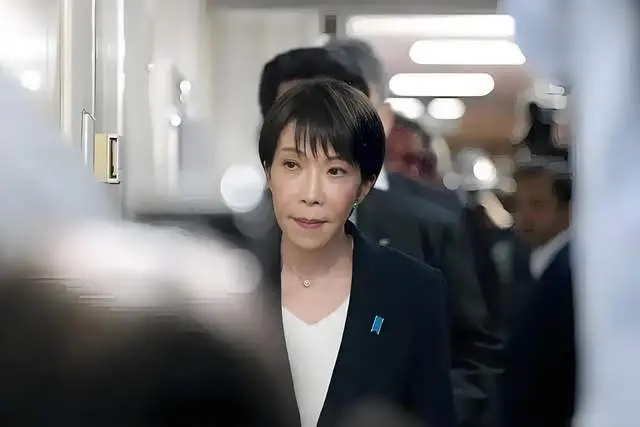
Strengthening of Japan’s pro-Trump strongwoman a recipe for conflicts at home and abroad
Chang Tso-Jen, ISA in China, Hong Kong and Taiwan
The huge victory for Prime Minister Sanae Takaichi in Japan’s snap election on 8 February, marks a turning point not only for Japan’s domestic politics. In the tumultuous era of Trump 2.0, and Takaichi’s months-long diplomatic brawl with China, the election outcome will reverberate around the region.
Takaichi’s Liberal Democratic Party (LDP) won its largest number of Lower House seats in the party’s 71-year history with 316 seats. Including its far-right ally, the Japan Innovation Party, which won 36 seats, the ruling right-wing coalition secured a supermajority of 352 seats in the 465-seat Lower House, against 111 seats for all other parties. With only sixteen days between the dissolution of the House and the election, and with one of the lowest turnouts (56.3%) since the end of WWII, Takaichi’s political gamble paid off.
Takaichi was able to garner significant public support in a short period, partly being seen as “fresh” and “anti-establishment” due to her gender. She was also clearly helped by the dispute with Beijing, which erupted last November over comments she made on the Taiwan question, and which projected her as a nationalist strongwoman.
Her personalised social media strategy diverted public attention from discontent with social crises and systemic problems to promote her “commoner strongwoman” (i.e. strong woman from an ordinary family background) narrative. This emphasised her background from an ordinary dual-income family, attempting to distance herself from the LDP’s generally corrupt, nepotistic and corporate image.
In a national ranking of last year’s most popular new buzzwords, “female prime minister” (Josei shusho) and Takaichi’s slogan, “I will work, work, work, work, work” (Hataraite hataraite hataraite hataraite hataraite mairimasu) topped the list. The election results also allow Takaichi to bypass the resistance of the Upper House, where her coalition is in a minority. This means there are few or no parliamentary barriers to her conservative, militarist agenda. Only mass resistance can block her path.
Faced with strong public discontent over soaring prices in Japan, Takaichi proposed during her election campaign to completely abolish the current 8% consumption tax on food items within two years to garner support. However, this promise itself is a sham reform aimed at buying off the masses, a common tactic used by right-wing politicians worldwide
Widening wealth gap
Japan’s wealth gap has reached a record high in recent years. The wealth of the super-rich tripled between 2011 and 2023. Meanwhile, the real wage growth rate for the entire year of 2025 was estimated to be -1.3%, marking the fourth consecutive year of negative real wage growth in Japan.
For instance, although nominal wages were estimated to increase by 2.3% in 2025, the 3.7% surge in the Consumer Price Index (CPI) during the same period meant that the wage increase was completely swallowed by inflation, leaving the economic burden borne by the lowest-paid workers.
The Takaichi cabinet will not only fail to resolve the structural problem of continuously declining real wages. Her plan to revive “Abenomics”, of increased economic stimulus based on debt, is likely to exacerbate the vicious cycle of yen depreciation and inflation. [“Abenomics” is named after the assassinated former PM Shinzo Abe, who hails from the same right-wing nationalist LDP faction as Takaichi].
Takaichi’s economic plan (including a massive 21.3 trillion yen quantitative easing stimulus package covering artificial intelligence, semiconductors, and defence) will be financed through the issuance of deficit bonds, with the future debt burden falling back on workers through cuts to social welfare. Japan’s debt-to-GDP ratio is the highest of any advanced capitalist country, at around 240%.
Given Japan’s shrinking population (which has fallen from 128 million to 123 million since 2010) and aging demographics, retirees are among the sectors who will pay for the LDP’s capitalist “solutions”. Japan is gradually raising the retirement age for civil servants from 60 to 65 (expected to be completed in 2031) and encouraging companies to hire employees up to age 70. The government is also reducing pensions by various means.
A Prime Minister for women?
Although Takaichi is Japan’s first female prime minister, she is pushing a reactionary anti-equality agenda, including opposing same-sex marriage, opposing women’s right to retain their original surnames after marriage, and resolutely defending the male-line succession system of the imperial family, which is not about reforming an antiquated undemocratic institution, but rather about setting the tone for upholding sexism and patriarchy.
Therefore, Takaichi’s leadership of the LDP only reinforces Japan’s deeply entrenched patriarchal social structure. She is not about improving the overall economic and political status of Japanese women, which may explain why she was far more popular with male voters than female voters. This defense of the patriarchal order and her calls for military build-up are mutually reinforcing.
Militarism rests on a set of values emphasising nationalism, obedience, order, and sacrifice, and the traditional patriarchal family is an arena for fostering these values. By cutting public care and childcare resources, Takaichi is also shifting the burden of care back onto female workers within the family.
The return of Japanese militarism
With the LDP holding a supermajority of over two-thirds, Takaichi now possesses the power to amend Article 9 of the Constitution of Japan (the so-called “pacifist clause” which formally renounces the sovereign right to use force in international disputes). This has been a long-standing aim of LDP governments and Japan’s ruling class to grant the military a greater role. Now, this policy aim is being turbocharged by the favourable tailwinds of Trump 2.0, with the US regime aggressively pressuring its traditional allies to take on a bigger military burden to confront and contain Beijing’s regional imperialist ambitions.
Japan’s military budget for 2026 has soared to a record 9 trillion yen, accounting for more than one-tenth of national tax revenue, and the government plans to invest up to 43 trillion yen in military expansion over the next five years. Japan has already formally abandoned its long-standing “exclusively defense-oriented policy” after World War II, not only revising its national security documents to allow for “counterstrike capabilities” but also planning to purchase 400 US-made Tomahawk cruise missiles. To cope with potential “high-intensity, long-term conflicts”, the Takaichi government even plans to build 130 new ammunition depots across the country by 2032.
To support this massive military spend, each Japanese citizen is expected to face an additional tax burden of up to 80,000 yen, all at the expense of social welfare and public services. Following the election results, Nikkei 225 (one of Japan’s main stock market indices) hit a record high of over 57,000, a rise of 6%, while bonds and the yen are facing selling pressure, reflecting the financial markets’ frenzied expectations of Japan’s “reindustrialisation” and “liberalisation”.
Walking into a Taiwan storm
To legitimise its militarisation policy, the Taiwan issue has become the perfect geopolitical pretext for Takaichi. Takaichi has publicly declared that, “a Taiwan emergency involving the use of military force could constitute a ‘survival-threatening situation’ for Japan,” using this as a reason for potential Japanese military intervention. Consequently, Japan has shifted its military deployment focus to its southwestern islands, attempting to establish a long-range missile strike chain covering the Taiwan Strait.
This belligerent stance is inextricably linked to the pressure and endorsement from Trump, Takaichi’s ideological ally. Both use nationalism as a political rallying cry, respectively chanting ‘Japan First’ and ‘America First.’ However, within the framework of the US-Japan alliance, Takaichi’s ‘Japan First’ effectively means continued diplomatic and economic submission to the US, while the US views Japan as one of its pawns for containing Chinese imperialism. But we must not underestimate the longer term motives of Japanese imperialism itself; it is also preparing a grab for hegemony in East Asia should US imperialism become preoccupied with its own crisis.
China’s retaliation may not necessarily involve a direct military threat against Japan, but rather is more likely to employ economic measures. However, given that Chinese imperialism itself is mired in power struggles within the People’s Liberation Army (PLA) and a historic economic crisis, its countermeasures are at this stage limited to diplomatic protests and restrictions on imports of Japanese goods. Nevertheless, the possibility of this conflict escalating and even spiralling out of control cannot be excluded. The working class in China, Japan, and Taiwan will pay heavily for this, underlining the urgency of building independent working class political alternatives to the corrupt capitalist rulers in each of these states.
Collapse of the centre
This election witnessed the shrinking of the ostensibly left-wing forces and a historic defeat for the parties of the centre. The Centrist Reform Alliance, hastily cobbled together by the merger of the Constitutional Democratic Party of Japan (CDP) and the Komeito, suffered a catastrophic defeat, with their seats in total plummeting from 167 to only 49. Komeito was a long-term support party for the LDP, leaving the coalition government only when Takaichi became leader. The centre’s opportunism and lack of a political alternative, relying only on electoral manoeuvres, was incapable of responding to the public’s anger over declining living standards and illusions that Takaichi may be “different”.
Meanwhile, the official Left – Japanese Communist Party (JCP) and the Reiwa Shinsengumi – also suffered heavy losses, dropping to 4 and 1 seats respectively.
The anti-establishment anger was not channeled to the left; instead, it was exploited by the far right. The far right Sanseitō, which advocates ‘Japanese First’, conspiracy theories, and extreme racism against immigrants, surged from two seats to 15. As Takaichi and the LDP continue to move to the right to consolidate their voter base, emulating Trump, anti-foreigner and racist sentiment in Japan is growing rampant.
Earlier this year, Takaichi approved stricter rules for permanent residency and citizenship, and intensified its crackdown on and deportation of undocumented immigrants. While the public suffers from inflation and stagnant wages, right-wing populist politicians have seen this as an opportunity to shift the blame for the capitalist crisis onto Southeast Asian migrant workers and foreigners, thereby diverting working class anger from capitalism and the LDP’s corrupt rule.
The election represents the probable peak of Takaichi’s personal power, but is also a microcosm of the dangerous trends within global capitalism. Driven by the intensification of imperialist conflicts, the unbearable cost of living crisis, and long-term economic stagnation, the suppression of democratic rights, the intensification of militarist expansion, and the incitement of nationalism and right-wing populism are becoming the norm for ruling classes around the world.
Workers’ alternative needed
Further increasing the military debt burden and binding the entire nation to a patriarchal, racist, and militarist path will absolutely not rescue Japan from its struggling economic and population crisis; it will only push the working class into deeper suffering. To reverse this dangerous historical trend, it is not effective to fight right-wing populism by relying on moralistic appeals that depend on exposing corruption scandals of the LDP, or on abstract anti-militarist propaganda as the JCP leaders do.
Workers and socialists urgently need to prepare for future attacks by Takaichi and the right on the living standards and democratic rights of the masses, and support movements and struggles of the working class when they come into being. We also need to extend these initiatives across national borders, not only to oppose the militarisation threat from Chinese, Japanese and US imperialism in East Asia, but also to overthrow global capitalism which means exploitation, war and existential crises for humanity, and replace it with a democratic socialist society.