March 10, 2026. Danny Byrne, ISA International Political Committee
Lives, energy, ecology and the world economy all under attack
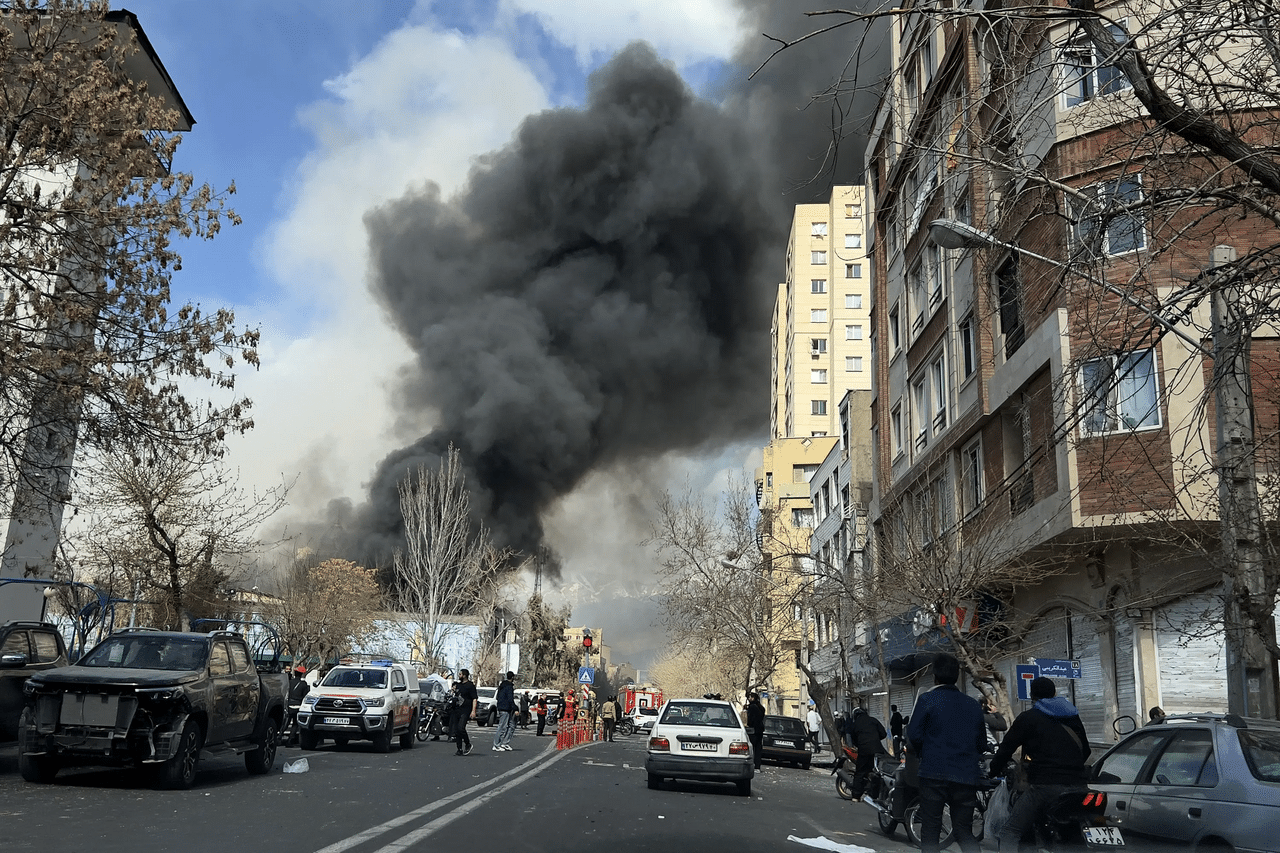
US imperialism’s war in the Middle East has continued to escalate into its second week. On the war’s eleventh day (10 March), US Secretary of War Pete Hegseth declared that “today will be the most intense day of strikes” so far. Images of mushroom clouds and raging infernos from downtown Tehran, Beirut, and elsewhere have flooded the airwaves. The confirmed death toll has run into the thousands.
Not content with blowing up schools and hospitals, US and Israeli warplanes began to target energy infrastructure in Iran. A human and ecological catastrophe is playing out after oil refineries and storage sites were set ablaze. Black rain fell in Tehran and residents were warned to stay indoors to avoid acid rains and deadly fumes. Water flowing through irrigation systems was contaminated, in turn pumping toxins into surrounding wildlife. The World Health Organisation confirmed on 9 March that “Damage to petroleum facilities in Iran risks contaminating food, water and air – hazards that can have severe health impacts especially on children, older people, and people with pre-existing medical conditions.”
In another terrifying escalation for the region’s people, water supplies are now also under attack. In Iran, which has been suffering from an acute water crisis for a number of years, the US struck a vital water desalination plant on Qeshm island, which supplies 30 towns and villages. In response, Iranian drones hit a similar plant in Bahrain.
The people of the Persian gulf are highly dependent on desalination, a method used to provide most drinking water in one of the planet’s driest regions. In Kuwait, for example, 90% of drinking water comes from plants that could now be destroyed.
Tehran Is Still Hitting Back
Washington’s warmonger-in-chief has unleashed a juggernaut of human misery. His Secretary of War, Pete Hegseth, the creature adorned in white nationalist tattoos who now has the US military at his disposal, delights in this fact. He boasted to reporters that the US and Israel would rain down “Death and destruction from the sky all day long” once Iran’s air defences had been sufficiently depleted. “This was never meant to be a fair fight, and it is not a fair fight. We are punching them while they’re down, which is exactly how it should be.”, he sneered, “the only ones that need to be worried right now are Iranians that think they are going to live.”
The Iranian regime is indeed “down” but they are certainly still not out. The nomination of the reactionary Motjaba Khamenei as his father’s successor to the post of ‘Supreme Leader’ is a show of defiance in the face of Trump’s demands for unconditional surrender. While the US has made much of the fact that Iranian missile and drone fire has diminished, there is no doubt that it continues.
The impact of Tehran’s retaliatory strikes is very effectively censored in Western media, but it is clear that they have been highly impactful. Seven US troops have been killed in two attacks (in Kuwait and Saudi Arabia) and two Israeli troops were killed by Hezbollah fighters in Lebanon. In Israel, more than 2,000 people have been hospitalized by Iranian strikes since the beginning of the war, with 13 confirmed civilian fatalities. US and allied bases have been hit in six countries and billions of dollars worth of US radar and missile defence systems have reportedly been destroyed. 23 people are confirmed to have died in Gulf states, most of whom were military and security personnel. As Hegseth says, it is not a fair fight, or an evenly matched one, but Iran has shown the ability to exact a significant price for Trump’s aggression.
The longer the war continues, the more dangerous the pattern of escalation will become. Trump spent the last week attempting to begin a ground war against the Iranian regime via Kurdish and Baloch militias. Reports also indicate that plans for US and Israeli “boots on the ground”, initially in the name of killing remaining regime leaders and seizing uranium stockpiles, are under active consideration.
The working class in the region and internationally cannot afford to sit back and hope Trump chickens out. Workers must organise, mobilise, blockade, protest and strike to shut down the war machine and kick out all the warmongers.
War on the World Economy?
The war’s second week also saw the impact on the world economy sharpen further. On 9 March, oil prices rose at the fastest rate since the onset of the Covid pandemic and stock markets plummeted. Quoted in the UK Guardian, Chris Beauchamp, chief market analyst at IG explained, “Stock markets have finally woken up to the implications of the Iran war, as oil hits three figures for the first time in four years. Having remained remarkably complacent last week, it looks like the rush for the exits has begun in earnest..”
Iran’s effective closure of the Strait of Hormuz and consistent messaging from Washington and Tehran that the conflict would be an extended one has heightened risks of an intense energy crisis and spooked the markets. Following attacks on oil facilities, Bahrain joined Qatar in declaring “force majeure” (an inability to fulfil contract obligations due to uncontrollable events) on energy exports. According to multiple reports, oil production in the region could be only days away from a complete shutdown. The G7 organised a hasty summit to discuss releasing emergency oil reserves to bolster supplies and calm markets, but reportedly failed to agree immediate measures.
Market falls on 9 March were most pronounced in South East Asia, which is heavily dependent on fossil fuels which pass through the Iranian-controlled strait. In South Korea, trading had to be suspended twice with stocks in freefall.
The military mobilisation of the West stands in contrast to the humiliating response (or non-response) of Chinese imperialism, which is the main target of Trump’s global imperialist aggression. Despite the unrelenting US assault on its allies and spheres of influence, the Xi regime still plans to roll out the red carpet for Trump in Beijing on 31 March! For Beijing, in the grip of a historic crisis, preserving its precarious trade detente with US imperialism overshadows all other questions.
Russia, on the other hand, is reportedly providing crucial assistance to Iran in the form of intelligence which assists the targeting of US bases in the Gulf. Moreover, despite his alliance with Tehran, Putin is actually emerging as a winner from this war in several respects. First and foremost, Russian oil exports have become a far more attractive and expensive commodity overnight, with US sanctions on their sale being eased to boot. In addition, Western attention and supplies are almost certain to be further redirected from Ukraine, – Putin’s war, – to the Middle East.
The Only Solution – International Working-Class Struggle for Peace, Freedom and Socialism
Iran’s new Ayatollah, Mojtaba Khamenei, signals both the continued control of regime loyalists over the Islamic dictatorship and the abject failure of Trump and Netanyahu’s decapitation strategy. The new Supreme Leader has never given a single public speech, but is reported to have been central to the brutal crushing of a mass uprising in 2009 and emerged as the favoured candidate among IRGC ‘hardliners’.
His succession also underlines that US and Israeli bombs have done nothing to assist the Iranian people’s struggle for freedom from the blood-soaked regime. A potential ground war, in which the regime would seek to rally the Iranian people in defence of territorial integrity against “separatists” could actually strengthen its position in the short term.
Uncertainty about the outcome of the war, and fear of public outcry over any direct collaboration with Israel, has so far held back Gulf states from militarily responding to the attacks from Iran. If Trump retreats, they will become even more obvious targets, further undermining their image of stability and prosperity.
The international working class, especially in the region itself, must enter the stage to stop the war. This can provide the Iranian working class with the space to rebuild the revolutionary movement, this time led by working-class organisations armed with a socialist alternative programme. In the process, this movement must take aim at all the capitalist regimes in the region and fight for a shared socialist future of peace and freedom from occupation and oppression.