
Li Yong, China Labour Forum
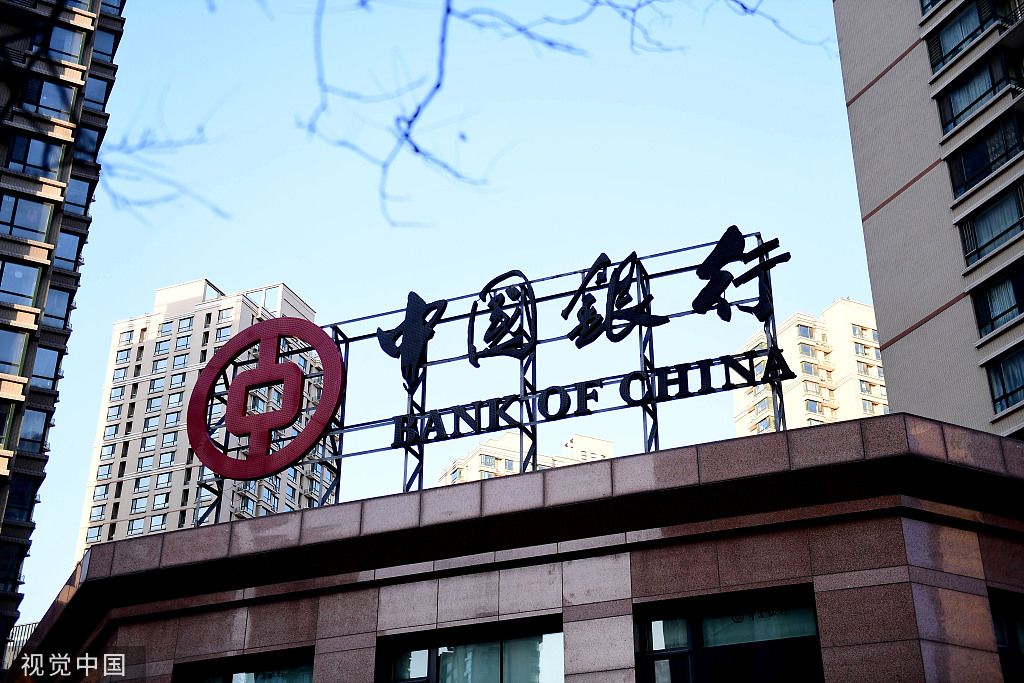
The National Audit Office of China recently revealed that the Bank of China had evaded approximately 2.4 billion yuan in taxes. Why did one of China’s largest state-owned banks go to such lengths to retain these 2.4 billion yuan?
What this incident truly reflects is the increasingly heavy economic pressures bearing down on China’s financial system. Even large state-owned banks are now resorting to every possible means to retain more funds for themselves, rather than handing them over to the government. Consequently, the tax evasion by the Bank of China that has now come to light is not merely a case of illegal conduct by a single enterprise, but should be viewed as a sign of the deepening crisis in China’s capitalist economy.
Over the past two decades, China’s banking sector has experienced a period of rapid expansion. Total banking assets have grown almost 14-fold from approximately CNY 35 trillion in the mid-2000s to over CNY 480 trillion in 2025. These incredible numbers show the growth in China’s debt, which is now a crushing weight on the economy that is strangling growth. China’s ‘state capitalist’ growth model, built upon debt and a property bubble, was once hailed as a ‘miracle’.
However, with the bursting of the property bubble, this model has effectively crash-landed. Bank profit growth is nowhere near what it once was, and banks are increasingly required to set aside funds for potential massive bad debts in the future. Against this backdrop, retaining cash and reducing tax expenditure have naturally become key considerations for banks.
What is even more noteworthy is that the incident was disclosed proactively by the National Audit Office. This does not imply that the Chinese Communist Party dictatorship has suddenly become more transparent or clean, but rather reflects that the government itself is running short of money.
In recent years, the collapse of the property market has led to a sharp contraction in local governments’ land sale revenues. At the same time, central government revenue has, at one point, recorded its first decline since the pandemic. Under these circumstances, the central government needs every penny of fiscal revenue more than ever before and is cracking down more vigorously on various forms of tax avoidance and evasion.
It is worth noting that the Bank of China is not the only financial institution facing difficulties. In recent years, many banks have scaled back their branch networks, made staff redundancies and reduced salaries, whilst senior management remuneration has also been capped. Banks have adopted a more conservative approach to lending, with stricter approval processes for corporate and household loans, reflecting a gradual shift across the entire financial system from rapid expansion towards risk mitigation.
This 2.4 billion yuan tax evasion case is therefore not merely an isolated incident. It illustrates that even China’s most important state-owned financial institutions are entering a period of deeper financial stress and a fight for survival’.
No amount of ‘tinkering’ or ‘reform’ within China’s capitalist framework can save this system (despite dictatorial rule by the CCP, China’s economy is fundamentally a capitalist one much like the other capitalist countries, which are also in crisis). What is needed is a revolutionary socialist transformation, putting the banks and big companies under democratic public ownership and with power and decision-making exercised democratically by the working class. The twin sicknesses of dictatorship and capitalism should be ended and replaced with a democratic plan to raise wages and pensions, cut working hours, and run the economy and the banks to meet society’s needs.