More than one thousand dead in Nepal – no credible death toll yet reported on the Chinese side
chinaworker.info reporters
The horror of the Himalayan disaster of August 26-27, on the border between Tibet and Nepal, was expressed by one woman who narrowly escaped when the bus she was travelling in was swept away: “It was water mixed with mud that was a good 50 to 60 feet high. It stood like a serpent right there staring at us.”
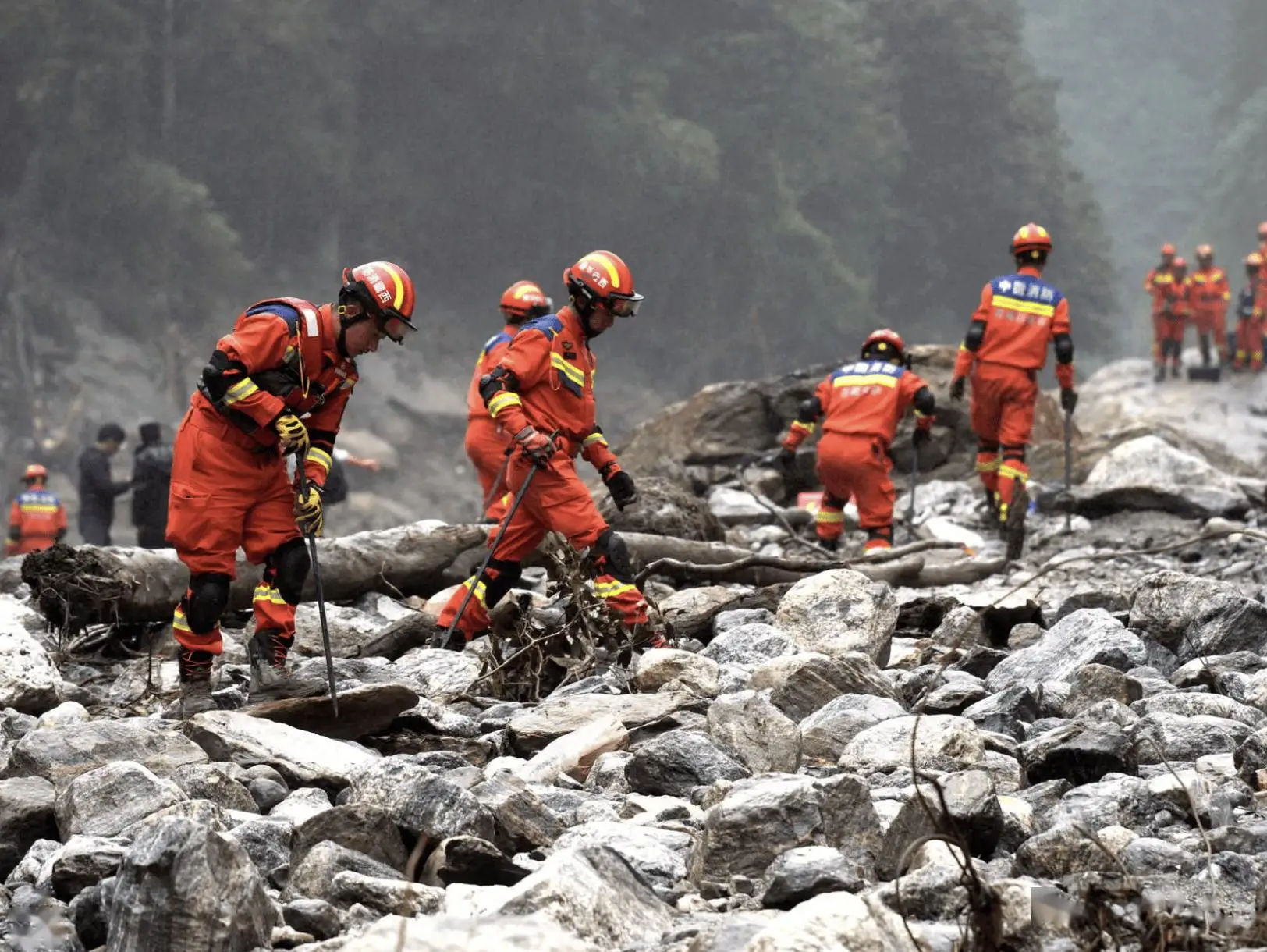
This was one of the most severe natural disasters to strike the Himalayan region in recent years. A massive glacial collapse occurred on the northern slope of Langtang Lirung peak in Nepal, at an altitude of approximately 5,200 metres. Ice and underlying bedrock crashed down at high speed, carrying with it mud and debris from the mountainside, creating a colossal mudslide and flash floods that raced down the river valley on the Tibetan side of the border, then striking the Gyirong Port on the China-Nepal border and the Rasuwa district of Nepal. It crashed through the Trishula River valley for 72 kilometres, bringing death and unfathomable destruction. Some of the dead bodies were carried into India, 150 kilometres downstream.
Initially, seismologists mistook the incident for a magnitude 4.4 earthquake. The force of the collapsing rock and ice triggered a 5.2 reading on the Richter scale – equal in power to the Hiroshima atom bomb. Wherever the mudslide passed, villages, roads, bridges and hydroelectric facilities were almost completely levelled. 40 kilometres of road and 19 bridges were swept away. Dozens of settlements and even whole villages were flattened. 2.2 million tonnes of debris was dumped in the disaster zone.
As of 14 September, 1,385 people are reported dead in Nepal, with 5,130 missing. The official toll in China is 43 dead and 519 missing. Several Chinese-built hydroelectric power stations in Nepal were buried, and around 900 workers were at one point unaccounted for, with dozens of them possibly still trapped in underground tunnels.
chinaworker.info express our condolences to all those who have lost their families, homes and livelihoods. However, in the face of such a massive disaster, we cannot simply “unite in grief” but need to look at why, how, and what caused this disaster.
The climate crisis – caused by capitalism’s destruction of the planet’s resources – is making such extreme events even more dangerous. The lack of democratic control by the working class and poor majority, information blackouts, and a so-called development model geared only to capitalist and geopolitical i.e. militarist interests, have further amplified the disaster.
No “negative” news
There is a stark contrast in the transparency of information between China and Nepal, despite the fact that China is far richer than Nepal with an economy 100 times bigger. Nepal has continued to publish figures on the dead, missing, and foreign travellers, whilst seeking relief supplies from foreign governments and NGOs. The Nepalese immigration authorities even utilised electronic records to reconstruct the entry records from the morning of the disaster.
On the Chinese side, however, the familiar apparatus of the CCP’s dictatorial information control was once again set in motion. In the early stages of the disaster, officials reported three deaths and several hundred missing persons; thereafter, updates to the death toll were slow to come.
Surveillance footage released by members of the public which showed the five-storey Gyirong Gate border crossing being completely demolished by the mudslide was deleted within the Great Firewall. For the Chinese dictatorship such images, which convey vulnerability and failure, are not a good fit with Beijing’s “invincible” propaganda. Beijing’s Ministry of Public Security reported that ten people had been detained accused of spreading falsehoods online.
Journalists were reportedly barred from entering the disaster area on their own to interview survivors and their families. It was not until nearly two weeks after the disaster that Beijing first arranged for a small number of foreign media outlets to enter the core disaster zone.
The CCP dictatorship routinely bans “negative” news reports, operates in near total secrecy, and downplays numbers of fatalities. It did this on a massive scale during the COVID-19 pandemic. Following the sudden end of China’s ‘zero-COVID’ policy in late 2022, hospitals and crematoria were overwhelmed, yet the authorities temporarily ceased publishing figures on infections and deaths; to this day, the number of lives lost remains a mystery. Such is the logic of authoritarian rule. For the dictatorship, information is first and foremost a tool for maintaining the regime’s image and ‘social stability’, a euphemism for regime control.
How to report on the Himalayan catastrophe is an especially sensitive problem given China’s intensified repressive controls and national oppression in Tibet. In July, Beijing adopted its new ‘ethnic unity law’, which further cements the CCP’s Han chauvinist doctrine. Under this law, promoting minority languages or reporting human rights abuses are further criminalized.
Climate destruction
The Himalayan catastrophe is the latest evidence of a rapidly worsening climate crisis. Coastal provinces of China have been battered by four severe typhoons so far this year. Over 130 people were killed during “historically rare” flooding in Guangxi province. Europe has suffered from months of drought and record-breaking heat in 2026. As ISA’s Arne Johansson explains in his report, ‘Extreme Weather Disasters – The Planet is Fighting Back’, the heatwave will wipe out the entire 1% GDP growth projected in the EU this year.
The Himalayas and surrounding region are sometimes called the “Third Pole” because they contain the biggest volume of glacial ice and snow outside of the north and south poles. Likewise it is among the regions most impacted by climate change, with temperatures warming at twice the global average. China is the world’s biggest source of climate destruction, accounting for one-third of global greenhouse emissions.
This is accelerating the retreat of glaciers on the Qinghai-Tibet Plateau and in the Himalayas. Since 1980, there has been a marked increase in glacial lake outburst floods in the region, with the China-Nepal border being one of the areas where the risk has risen most significantly over the past decade. A 2023 paper by the Institute of Tibetan Plateau Research at the Chinese Academy of Sciences states that potential glacial lake outbursts now threaten more than 55,000 buildings, 105 hydropower projects, and thousands of kilometres of roads and bridges.
This is by no means the first time that Gyirong has been the subject of warnings. In 2025, floods along the China-Nepal border swept away the Friendship Bridge and left many people missing. Just one year later, an even greater disaster has struck the same region.
Imperialism and geopolitical competition
Meanwhile, the capitalist CCP regime continues to regard the geologically fragile Himalayan region, an area of intense tectonic activity, as a frontline for infrastructure expansion and geopolitical competition. Here, Chinese imperialism vies for regional hegemony and control with aspiring Indian imperialism. The two neighbours engaged in a deadly border conflict in 2020 at Galwan, some 1,000 kilometres to the west of the current disaster zone. Nepal is landlocked between India and China-controlled Tibet.
Since Nepal’s then Maoist-led government in 2017 signed up for China’s imperialist ‘Belt and Road Initiative’, Chinese loans and construction in Nepal have also skyrocketed. Projects include the China-Nepal Highway and the planned China-Nepal railway.
Studies have identified hundreds of potential landslides, some of which directly threaten the highway and planned railway. Road excavation, tunnelling, hydropower and other engineering activities further increases environmental pressures in the region.
This grandiose infrastructure roll out is capitalist and imperialist in nature. It is not undertaken to improve the conditions of the local population or Nepal’s economy, but primarily to further Beijing’s drive for both “clean energy” resources and military-strategic control (to maintain its hold on Tibet). The construction frenzy may have been an additional aggravating factor behind the August disaster, magnifying the impact of climate change. The reengineering and narrowing of natural river valleys and floodplains, using millions of tonnes of concrete, could act as an accelerator and amplifier of the destructive power of floods.
China now accounts for over half of Nepal’s foreign investment. It has funded and built 12 hydropower and dam projects in Nepal – every single one of which was severely damaged or swamped during the August mudslide, according to the BBC.
Democratic working class control
Especially at a time when climate change is rapidly increasing the risks in the volatile Himalayan region, all construction projects must undergo open and democratically-controlled environmental and geological assessments. This demands a system of democratic working class control over the economic and political system, with real independent workers’ organisations and trade unions, a free working class controlled media and full equality and democratic rights for all ethnic groups. This is what real socialism means. These necessary changes are impossible within the cage of tyrannical capitalist rule under the CCP.
There is a need for full transparency regarding the number of deaths, missing persons and border crossing data in the disaster-stricken areas, an end to the media blackout, and unrestricted access for disaster victims, their families, and reporters.
All hydropower, railway, road and mining projects in Tibet and the Himalayan region must undergo geological and environmental safety assessments with veto power in the hands of the working class and local poor. Independent workers’ unions must be legalised and provided full access. High-risk areas require the establishment of transnational glacier monitoring, early warning and evacuation systems, all under democratic public ownership and control instead of prioritising ‘prestige projects’ and military expansion.
The August catastrophe is a sharp warning. In defiance of the scientific evidence and previous promises to reduce emissions and limit temperature increases, capitalists and politicians globally are now prioritising militarism, oil and coal. The struggle against climate disasters is therefore linked to the struggle against the CCP capitalist dictatorship and the global capitalist system.